(800) 707-9111
 Call
Call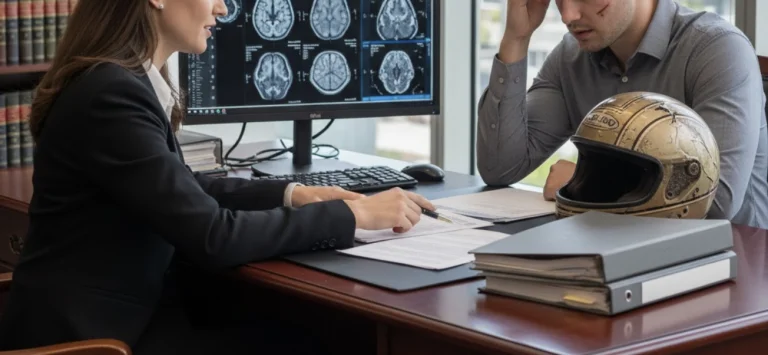
Proving a Traumatic Brain Injury (TBI) in a Personal Injury Case
Table of Contents
Traumatic brain injuries (TBIs) are among the most serious and misunderstood injuries in Florida personal injury cases. They can occur in seconds, in a car crash, fall, or workplace accident, yet have lifelong consequences for the victim and their family. While some brain injuries are immediately obvious, others can remain “invisible” for days or weeks, leading to confusion, personality changes, and cognitive decline that aren’t always easy to document or prove.
Proving a TBI legally requires medical evidence, expert testimony, and a deep understanding of how these injuries affect a person’s life. This guide explains how Florida personal injury lawyers build strong cases for brain injury victims, the evidence needed, and the damages available under state law.
Understanding Traumatic Brain Injuries
A traumatic brain injury occurs when an external force, such as a blow, jolt, or penetrating object, disrupts normal brain function. TBIs can result from:
- Car, truck, or motorcycle accidents
- Slip and fall or premises liability incidents
- Construction site accidents
- Sports or recreational injuries
- Assaults or blunt-force trauma
TBIs are categorized as mild, moderate, or severe, but even a so-called “mild” concussion can cause lasting damage. Symptoms vary widely depending on the part of the brain affected and the force of impact.
Common Symptoms and Long-Term Effects
Because no two TBIs are identical, symptoms can range from subtle cognitive issues to severe physical disability. Victims may experience:
- Headaches, dizziness, or nausea
- Blurred vision or light sensitivity
- Memory loss or confusion
- Mood swings, irritability, or depression
- Fatigue or insomnia
- Difficulty concentrating or multitasking
- Loss of coordination or balance
- Seizures or sensory impairments
In severe cases, victims may face permanent brain damage, loss of independence, or the need for lifelong medical and personal care.
The Legal Challenge: Proving a TBI
Proving a brain injury in court isn’t always straightforward, especially when diagnostic imaging (like MRIs or CT scans) appears “normal.” Insurance companies often downplay TBIs, arguing that symptoms are exaggerated or unrelated to the accident.
A Florida brain injury attorney must demonstrate both causation (the injury was caused by the accident) and damages (the extent of its impact on the victim’s life).
Evidence commonly used to prove TBI includes:
- Medical records and diagnostic imaging (CT, MRI, PET scans)
- Neuropsychological testing showing cognitive impairment
- Expert testimony from neurologists or neuropsychologists
- Witness statements from family, friends, or coworkers noting behavioral changes
- Employment and school performance records reflecting post-accident decline
- Daily journals tracking symptoms, treatments, and emotional effects
Combining medical science with real-world evidence creates a clear picture of how the injury disrupted the victim’s quality of life.
Types of Accidents That Commonly Cause TBIs
Car and Truck Accidents
High-speed impacts can cause the brain to collide with the skull, leading to bruising or bleeding. Victims may lose consciousness briefly or develop delayed symptoms such as memory loss or concentration problems.
Motorcycle Accidents
Even with a helmet, riders face a high risk of brain trauma. A Florida motorcycle accident lawyer can help prove the mechanics of impact and helmet compliance to establish negligence.
Slip and Fall or Premises Liability Cases
Falls are a leading cause of TBIs among older adults and children. Property owners who fail to maintain safe conditions, like repairing uneven flooring or cleaning spills, can be held liable under Florida premises liability law.
Construction and Workplace Accidents
Falling objects, scaffolding collapses, or equipment malfunctions frequently cause serious head trauma on job sites. A Florida construction accident attorney can coordinate workers’ compensation and third-party negligence claims simultaneously.
Establishing Liability in a Florida Brain Injury Case
Florida law requires showing that another party’s negligence directly caused the TBI. The injured person (plaintiff) must prove:
- The defendant owed a duty of care (to drive safely, maintain property, etc.)
- The defendant breached that duty through careless or reckless conduct
- The breach caused the brain injury
- The victim suffered measurable damages as a result
Because Florida follows a modified comparative fault system, victims can still recover damages if they are 50% or less at fault for the accident, though their award is reduced by that percentage.
Damages Recoverable in a TBI Case
TBIs often lead to extensive medical treatment and rehabilitation. Compensation may include:
- Medical expenses (emergency care, hospital stays, rehabilitation, medication)
- Lost wages and loss of earning capacity
- Pain and suffering
- Loss of enjoyment of life
- Future medical costs and assisted care
- Home modifications or mobility aids
- Emotional distress
- Loss of consortium (for spouses and family members)
In cases of gross negligence, such as drunk driving or intentional misconduct, punitive damages may also be available.
The Importance of Expert Testimony
In brain injury litigation, expert witnesses play a critical role. Neurologists, neuropsychologists, and rehabilitation specialists can explain to a jury how a brain injury occurs, why symptoms persist, and what the victim’s long-term prognosis looks like.
A skilled Florida personal injury lawyer will retain credible medical experts who can testify about both the science and the human impact of the injury, connecting medical data with real-world consequences.
Related Practice Areas
TBI claims often overlap with several other types of Florida personal injury cases, such as:
- [Florida Car Accident Lawyers], for collisions leading to head trauma.
- [Florida Slip and Fall Attorneys], for head injuries caused by unsafe premises.
- [Florida Motorcycle Accident Lawyers], for high-impact roadway crashes.
- [Florida Catastrophic Injury Lawyers], for severe, life-altering injuries.
- [Florida Wrongful Death Lawyers], when brain injuries prove fatal.
Each of these areas focuses on establishing negligence, proving causation, and securing full compensation for victims.
Why You Need an Experienced Brain Injury Lawyer
Insurance companies often rely on subtle but powerful tactics, questioning the legitimacy of your symptoms, blaming preexisting conditions, or offering low settlements before your diagnosis is complete. A Florida TBI lawyer knows how to push back using medical documentation, expert opinions, and trial strategy.
With deep experience handling complex neurological injury cases, Kogan & DiSalvo Personal Injury Lawyers fights for clients suffering from both visible and invisible consequences of brain trauma.
Call Kogan & DiSalvo Personal Injury Lawyers
If you or a loved one sustained a traumatic brain injury in Florida, don’t face the recovery and legal process alone. The experienced attorneys at Kogan & DiSalvo Personal Injury Lawyers can investigate your case, consult leading medical experts, and pursue the full compensation you deserve.
Call (561) 286-8132 for a free consultation. We serve clients statewide from offices in Boca Raton, Delray Beach, Plantation, Palm Bay, St. Petersburg, Vero Beach, North Miami Beach, Boynton Beach, Fort Lauderdale, Lakeland, Stuart, Tampa, and West Palm Beach.