(800) 707-9111
 Call
Call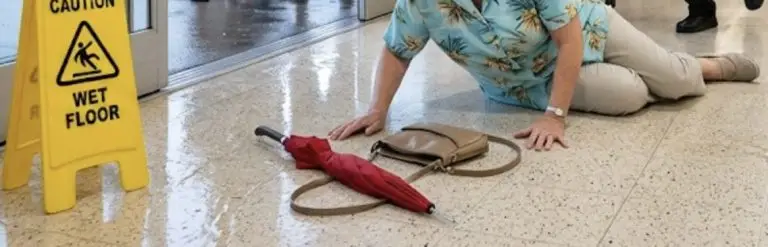
What to Do if Your Slip and Fall Claim Is Denied by Insurance
Table of Contents
You slipped, you were injured, you reported the incident, and then the insurance company denied your claim.
If this happened to you after a fall in a store, restaurant, apartment complex, or other property in Boca Raton, Fort Lauderdale, West Palm Beach, Delray Beach, Stuart, or elsewhere in South Florida, you are not alone.
Slip and fall claims are frequently denied, especially by large corporate insurers.
The good news? A denial does not mean you don’t have a case.
Kogan & DiSalvo helps injury victims challenge unfair denials and pursue the compensation they deserve under Florida law.
Injured in Florida? Let Kogan & DiSalvo help you get the compensation you deserve.
Why Do Insurance Companies Deny Slip and Fall Claims?
Insurance carriers often deny premises liability claims for predictable reasons. Common explanations include:
- “The property owner had no knowledge of the hazard.”
- “The condition was open and obvious.”
- “There is insufficient evidence.”
- “You were partially or fully at fault.”
- “Your injuries are pre-existing.”
In Florida, slip and fall cases are governed by specific legal standards. Under state law, you must prove the business had actual or constructive knowledge of the dangerous condition.
Insurance companies know this burden exists and they use it as leverage.
Step 1: Understand the Reason for the Denial
Before responding emotionally, review the denial letter carefully.
Key questions include:
- Did they claim lack of notice?
- Are they disputing the existence of a hazard?
- Are they questioning the severity of your injuries?
- Are they arguing comparative negligence?
Understanding their reasoning helps determine your next move.
A denial based on “insufficient evidence” may be overcome with additional documentation. A denial based on “no notice” may require investigation into inspection logs or surveillance footage.
Your recovery starts with a call to Kogan & DiSalvo.
Step 2: Preserve and Strengthen Your Evidence
If your claim was denied, evidence becomes even more important.
Critical evidence may include:
- Photos of the hazard
- Surveillance footage
- Witness statements
- Incident reports
- Maintenance and inspection logs
- Medical records
- Expert safety analysis
For example:
If you slipped on water near a store entrance during a South Florida rainstorm and there were no mats or warning signs, documentation of weather conditions and prior similar incidents may be important.
Time matters. Surveillance footage may only be stored for a limited period.
Step 3: Do Not Accept the Denial as Final
Insurance denials are not court rulings.
An adjuster’s decision is not the same as a judge’s decision.
You have options, including:
- Submitting additional evidence
- Requesting reconsideration
- Filing a formal demand
- Initiating a lawsuit
Large retail chains, apartment complexes, and commercial property owners often deny claims initially, anticipating that some victims will walk away.
Persistence, backed by strong legal representation, can change outcomes.
Kogan & DiSalvo has helped injury victims across South Florida, now we’re ready to help you.
What If the Insurance Company Says the Hazard Was “Open and Obvious”?
This is one of the most common defenses.
An insurer may argue:
- The spill was visible.
- The condition was easily avoidable.
- You should have been paying attention.
However, even if a hazard is visible, property owners still have a duty to maintain safe conditions.
Florida courts recognize that:
- Customers may be distracted by merchandise displays.
- Poor lighting can affect visibility.
- Clear liquids are difficult to see.
- Unexpected hazards can exist even in plain sight.
“Open and obvious” does not automatically eliminate liability.
What If They Claim the Store Didn’t Know About the Hazard?
Florida law requires proof of actual or constructive knowledge.
Constructive knowledge may be shown if:
- The hazard existed long enough that it should have been discovered.
- The condition occurred regularly and was foreseeable.
For example:
If employees failed to inspect aisles for extended periods or prior incidents occurred in the same area, that may establish constructive knowledge.
Maintenance logs, employee testimony, and surveillance footage often become central pieces of evidence.
Step 4: Consider Filing a Lawsuit
If negotiations fail, filing a premises liability lawsuit may be necessary.
The process typically includes:
- Filing a complaint in the appropriate Florida court
- Serving the defendant
- Conducting discovery (depositions, document exchange)
- Participating in mediation
- Proceeding to trial if no settlement is reached
Many cases settle during litigation, particularly when evidence supports the injured person’s claim.
Filing a lawsuit often signals that you are serious about protecting your rights.
We’re here to help you understand your rights. Let’s talk.
How Long Do You Have to Act?
Under Florida law, most negligence claims must be filed within two years of the date of the accident.
Waiting too long after a denial can permanently bar recovery.
Additionally:
- Evidence can disappear.
- Witnesses may forget details.
- Surveillance footage may be erased.
Acting promptly protects your legal position.
How Slip and Fall Denials Affect Serious Injury Cases
Denials can be especially frustrating when injuries are severe.
Common serious fall injuries include:
- Hip fractures
- Traumatic brain injuries
- Spinal cord injuries
- Shoulder tears
- Knee ligament damage
In South Florida’s large retiree population, falls often result in long-term complications.
Insurance companies may attempt to attribute these injuries to age or pre-existing conditions.
Thorough medical documentation is critical to countering these arguments.
What If You Were Partially at Fault?
Florida follows a modified comparative negligence system.
If you are found more than 50% responsible, you may not recover damages.
If you are less than 50% responsible, your compensation may be reduced proportionally.
Insurance companies frequently exaggerate a claimant’s responsibility to minimize payouts.
A strong legal strategy challenges unsupported fault allegations.
Why Large Corporations Often Deny Claims
Major retailers and commercial property owners often:
- Have standardized claim denial procedures
- Use risk management teams
- Retain defense attorneys quickly
- Rely on corporate policies to limit liability
This is particularly common in cases involving:
- National retail chains
- Grocery stores
- Shopping centers
- Apartment complexes
- Hotels and resorts
Corporate defendants anticipate legal challenges, which makes experienced representation even more important.
Frequently Asked Questions About Denied Slip and Fall Claims
Can I Appeal an Insurance Denial?
You can submit additional evidence and pursue legal action.
Will Filing a Lawsuit Guarantee Compensation?
No, but it preserves your rights and often leads to renewed negotiations.
What If I Didn’t Take Photos?
Other evidence, including witness testimony and store records, may still support your case.
Do Most Denied Claims Stay Denied?
Not necessarily. Many denied claims are later resolved through negotiation or litigation.
Speak With Kogan & DiSalvo About Your Denied Claim
If your slip and fall claim was denied in Boca Raton, Fort Lauderdale, West Palm Beach, Delray Beach, Stuart, or anywhere in South Florida, do not assume the matter is closed.
Insurance companies deny claims every day, but strong evidence and experienced legal advocacy can change the outcome.
Call Kogan & DiSalvo today for your free consultation.
Injured in Florida? Let Kogan & DiSalvo help you get the compensation you deserve.
Your recovery starts with a call to Kogan & DiSalvo.